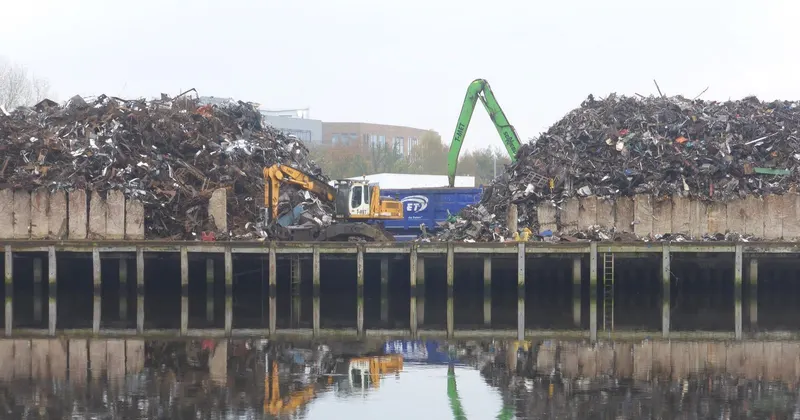

A biomass centre receives roundwood, wood chip, bark or forest residues and ships out wood chip, pellets or processed timber. Everything is bought and sold by weight, but the material changes while it sits in the yard: it dries, gets chipped, mixed and moved from one pile to another. If you do not keep tight control of what comes in and what goes out, your stock never adds up and you cannot tell whether the differences are normal shrinkage or kilos going missing. This article explains how to organise that control from the weighbridge.
Why the weighbridge is the heart of control
In biomass, volume is deceptive. A pile of wood chip can look the same from one month to the next while its weight has changed considerably through drying. The only reliable figure for buying, selling and knowing how much you hold is weight, and weight can only come from the weighbridge.
So the first principle is simple: everything that comes in and everything that goes out goes over the weighbridge. No exceptions for the trusted supplier, for your own lorry or for internal transfers between yards. Every movement that goes unweighed is a hole in your control.
Inbound loads: what to record for each lorry
For each lorry that arrives, you should note down at least the following:
- Supplier and, if traceability matters to you, the origin of the material (forest, estate, sawmill or industrial plant).
- Product: roundwood, wood chip, bark, pruning residues, sawdust… Each with its own item code, because they are not worth the same and do not behave the same way.
- Gross weight, tare and net weight, with a double weighing if the lorry is not a regular or if it changes trailer.
- Vehicle, haulier and driver.
- Quality remarks: very wet material, or material containing soil, stones or foreign matter. If a complaint follows, this note is what you will have to go on.
- Destination warehouse or pile, if you have several yards or areas.
Moisture and price: agree the criteria beforehand
Wood and wood chip contain water, and water has weight. A lorry of freshly produced wood chip weighs noticeably more than the same volume after weeks of drying. That is why, in biomass, a price per tonne only makes sense if both parties agree on how moisture is treated.
There are two usual ways to do it: pay per tonne as delivered, adjusting the price according to the type of material, or pay according to the moisture measured in each consignment. The second requires measuring moisture systematically using an agreed procedure. Whichever criterion you choose, put it in writing with each supplier and each customer, and record on the delivery note whatever you need to apply it later.
Outbound loads: the same rigour as inbound
For shipments to thermal power plants, industrial users or distributors, the weighbridge does two jobs: it documents what you sell and it stops the lorry leaving with more weight than permitted. Some guidelines:
- Always weigh the loaded lorry before it leaves, even if you have its tare stored.
- Check that the gross weight does not exceed the vehicle's maximum mass. With wet wood chip it is easy to go over without it being visible to the eye.
- State the exact product and the warehouse or pile it came from, so that stock is deducted from the right place.
- Hand the driver the delivery note with all the customer's details, the destination and the vehicle.
Reconciling stock and understanding shrinkage
In theory, stock is what has come in minus what has gone out. In practice, in biomass there is always a difference, and you need to know how to read it.
| Cause of the difference | What to do |
|---|---|
| Drying of the material | This is normal shrinkage. Estimate its order of magnitude from your own experience and watch that it does not spiral. |
| Processing (chipping, screening) | Record the input as one product and the output as another; screening rejects also have weight. |
| Unrecorded internal movements | Record transfers between warehouses or yards as stock movements. |
| Shipments without a delivery note | There should be none. If any appear, review the procedure. |
| Weighing errors | Check tares, weighbridge verification and incomplete weighings. |
Carry out regular stocktakes. Measuring piles is not exact, but comparing the physical inventory with the stock your delivery notes show at that date tells you whether shrinkage is within the normal range. If each stocktake comes out worse than the last with no explanation, something is going wrong.
Checklist for your yard
- All movements go over the weighbridge, including internal ones.
- Each product has its own item code.
- The tares of regular lorries are updated using a fixed criterion.
- The moisture criterion is in writing with each supplier and customer.
- Regular stocktakes are carried out and compared with the stock at that date.
- Shrinkage is measured and compared from one period to the next.
- The weighbridge has its periodic verification up to date.
Biomass with CargoGest
CargoGest works for timber and biomass: loads of wood chip, pellets or roundwood. It reads gross weight, tare and net weight directly from the weighbridge, with tares stored per vehicle and double weighing, and it weighs supplier inbound loads, with their goods-in delivery notes, in exactly the same way as outbound shipments to customers.
On the purchasing side it manages suppliers and their rates, purchase orders, supplier invoices and payments. On the stock side, it handles items by family, stock by warehouse, stocktakes, stock at a given date and transfers between warehouses. With several yards, it is multi-site and synchronises with head office. You can see it at weighbridge software and multiple sites and warehouses.