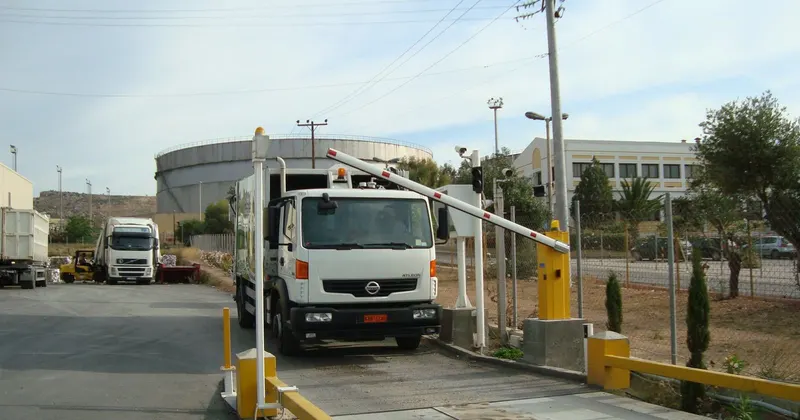

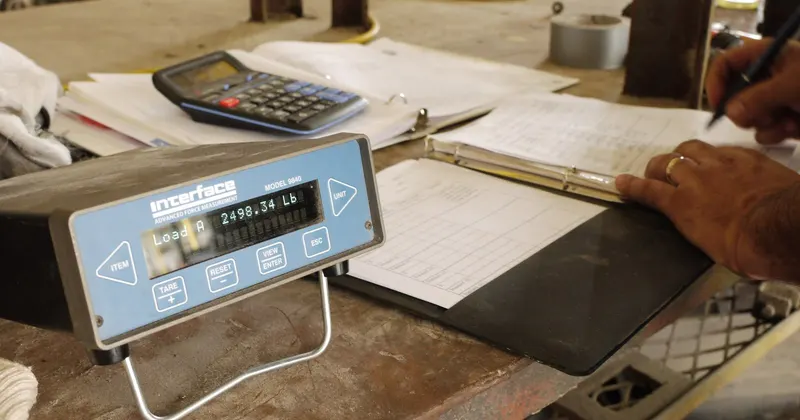
If you sell or buy by weight at your loading site, your truck weighbridge is not just any piece of equipment: it is subject to state metrological control. That means it must pass a periodic verification on time, it cannot be used for those transactions if it fails, and it needs a new verification every time it is repaired. This article summarises what the rules say, who does what and how to organise yourself so you are never late.
Why your weighbridge is subject to control
Ley 32/2014, de 22 de diciembre, de Metrología (Spain's Metrology Act), establishes in its Article 8 that measuring instruments used for reasons of public interest are subject to state metrological control, including guarantees of fair trade and consumer protection. A weighbridge used to weigh what you invoice falls squarely within that scope.
Article 9 of the same act splits control into two phases: conformity assessment, before the instrument is first put into service, and control of instruments in service, which includes periodic verification and verification after repair or modification.
The detail for each type of instrument is set out in Orden ICT/155/2020, de 7 de febrero, por la que se regula el control metrológico del Estado de determinados instrumentos de medida (the Spanish ministerial order regulating state metrological control of certain measuring instruments), which has since been amended (among others, by Orden ITU/1475/2024). Truck weighbridges are non-automatic weighing instruments, regulated in Annex I.
How often it must be verified
Under section 5 of Annex I of Orden ICT/155/2020, the period for periodic verification of non-automatic weighing instruments is two years.
Requesting it is the responsibility of the owner of the instrument, that is, your company. Article 14 of the order states that the owner must request it electronically at least one month before the deadline expires. If the deadline passes without verification, the weighbridge cannot be used for those purposes until it passes.
Verifications are carried out by authorised metrological verification bodies, or by the administration itself when it acts in that capacity. Responsibility lies with the autonomous communities (Spain's regional governments), so the specific application procedure and the bodies available depend on where your site is located. Check with the industry or metrology authority in your region.
What is checked and what happens if it fails
Verification involves an administrative examination and a metrological examination (Article 15 of the order). The administrative examination checks that the instrument is what it claims to be and that its documentation is in order. The metrological examination uses standard weights to check that the weighbridge weighs within the permitted errors, following the technical procedure in Appendix II of Annex I.
- If it passes, the body fixes a conformity label in a visible place on the instrument.
- If it fails, the body fixes a disqualification label and issues an unfavourable report (Article 18). The weighbridge cannot be used for those purposes until the defect is corrected and a verification after repair is requested.
The law adds a useful point when weight disputes arise: under Article 8.6 of Ley 32/2014, measurements made with instruments that have passed the control phases are presumed accurate unless proven otherwise. A weighbridge with up-to-date verification is your best argument with a customer or supplier.
Repairs and modifications
Periodic verification is not the only one. If the weighbridge is repaired or modified (for example, a load cell or the indicator is replaced, or a seal is broken), Article 7 of the order requires a verification after repair or modification before it goes back into service. The owner requests this too.
The repairer must issue a report on the work carried out (Article 6). Keep it with the rest of the weighbridge's documentation.
Bear in mind as well that the owner is obliged to take the instrument out of service if verification is not carried out for reasons attributable to them (Article 8.2 of the order).
How to organise yourself so you are never late
- Note the date of the last verification of each weighbridge and work out the next one. If you have several sites, make a list of all of them.
- Set a reminder with some margin. The request must be submitted at least one month before expiry; leave time to choose a body and arrange the visit.
- Plan the downtime. During verification the weighbridge is unavailable. Let customers and hauliers know, or choose a quiet time.
- Prepare the documentation: instrument details, certificates from previous verifications and repair reports.
- Check the platform before the visit: clean the area under the weighbridge, remove mud and load debris, and make sure nothing is rubbing against the sides. Many reading problems start there.
- After any repair, do not weigh for invoicing again until you have the corresponding verification.
- Keep the certificates for the whole life of the weighbridge.
Routine checks between verifications
Official verification is every two years, but a weighbridge can drift out of adjustment at any time. A few simple checks help you spot it early:
- The display reads zero with the platform empty.
- The same empty truck weighs the same on different days, within reason.
- The weight does not change if the truck is placed in different positions on the platform.
- There is no water, mud or trapped objects in the pits or around the edges.
If you notice anything odd, contact the technical service before the error reaches your delivery notes.
The weighbridge and the software with CargoGest
Metrological verification applies to the weighbridge, not to the management software, but the two work together. CargoGest reads the weight directly from the weighbridge through the serial port, with gross, tare and net, so the delivery note records exactly what a verified instrument shows, with no numbers copied by hand. It works with most models that send the weight through a serial port.
If you have several sites, each with its own weighbridge, CargoGest is multi-site and synchronises them with head office. Find out more on the weighbridge software page and the multiple sites and warehouses page.